

Solidity is a high-level, statically typed programming language designed specifically for writing smart contracts that run on the Ethereum blockchain and other compatible platforms. It is influenced by languages like JavaScript, Python, and C++, offering a syntax that is relatively easy to learn for developers familiar with these languages.
Today, we’ll explore the possible methods of programming in Solidity.
Method 1: Remix IDE
Remix IDE offers an easy-to-use environment to develop smart contracts and is ideal for beginners to start with Solidity. The welcome page and IDE can be found here:
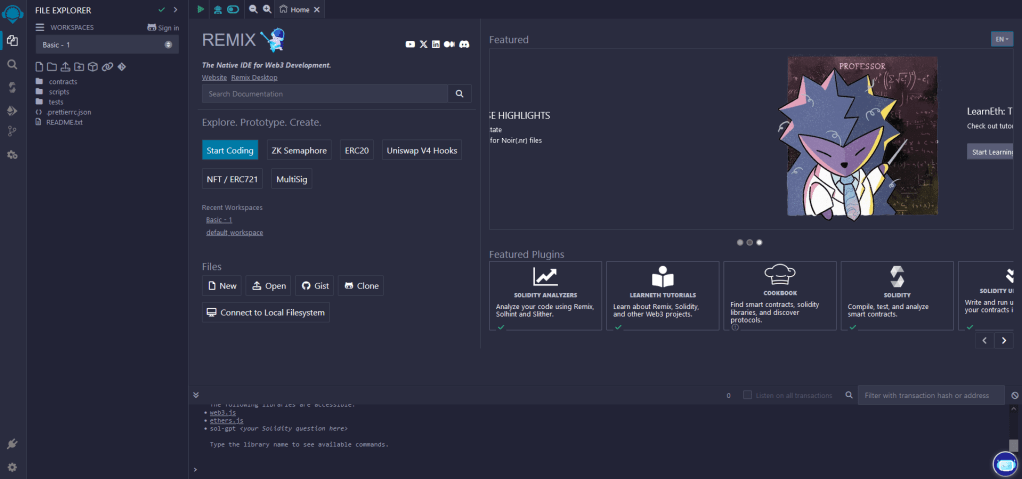
With the handy Remix IDE, you can easily start making smart contracts right in your browser with no local software installation required!
Method 2: Hardhat
Another way to develop smart contracts with Solidity is Hardhat, a development environment to create Ethereum smart contracts.

To install and use Hardhat, let’s make sure we have the latest Node and npm installed on our system. Download them here:
- Node: https://nodejs.org/
- npm: https://www.npmjs.com/
Next, create a new folder for your project, enter the folder, open a terminal, and write npm init to initialize a new project using the npm package manager:
npm init
Now, run the following command to locally install Hardhat:
npm install --save-dev hardhat
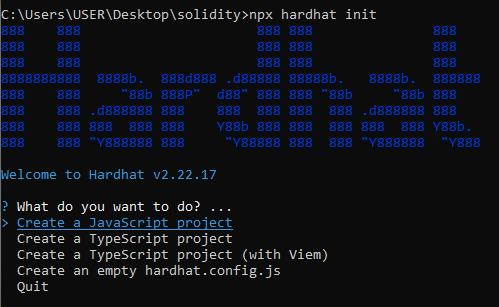
Run npx hardhat init in the project directory to create a Hardhat project:
npx hardhat init
Here, you can create either a JavaScript or a TypeScript project to start creating, testing, and deploying smart contracts.
And there you have it! We have discovered two methods to create Ethereum smart contracts using the Solidity programming language. Happy coding!

 The Computer Chick